





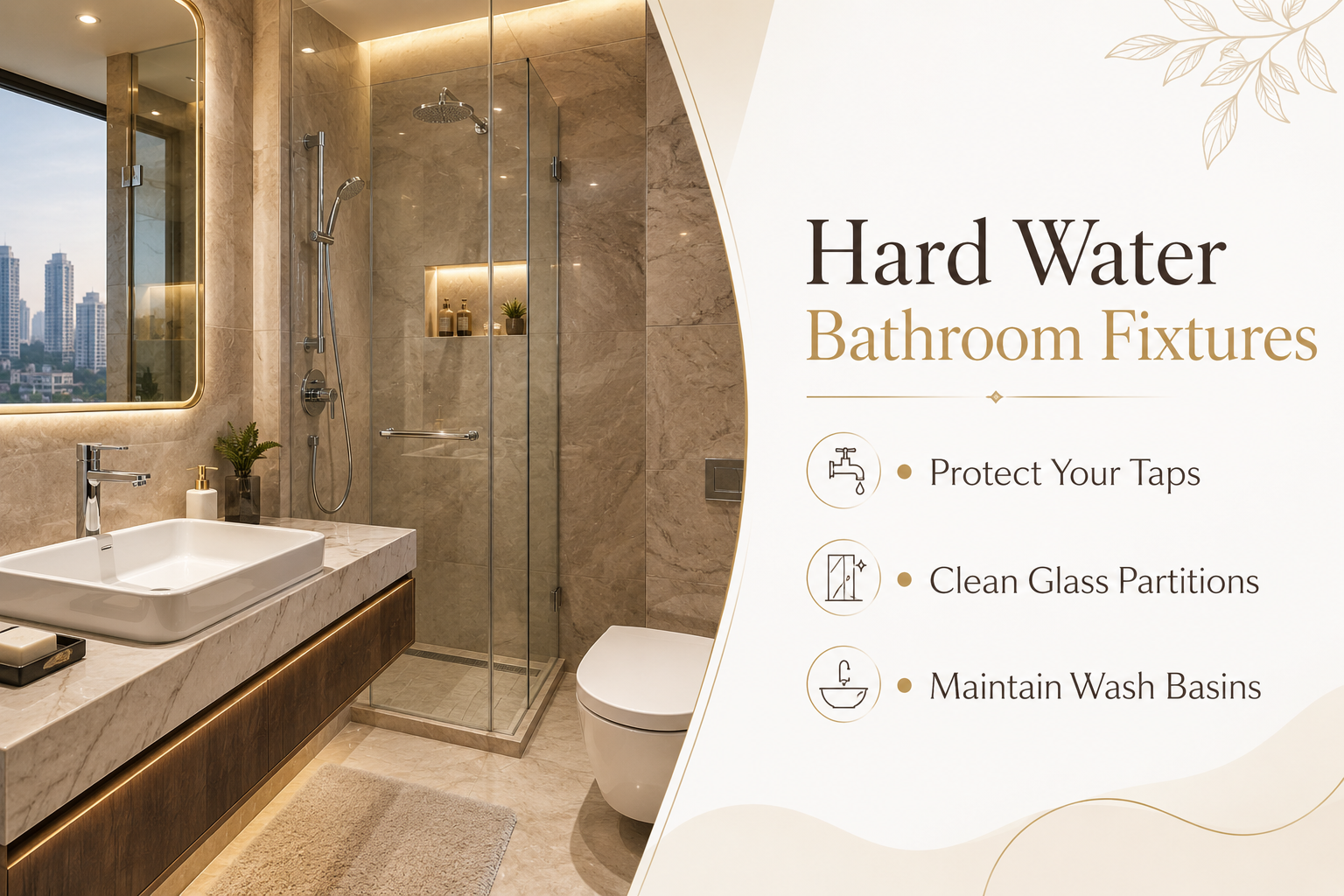
If you live in Mumbai, you have likely noticed white crusty deposits on your taps or a dull film on your shower glass. This is caused by Hard Water Bathroom Fixtures interacting with the city’s mineral-rich water supply. The damage is gradual but real, and it affects every fixture in your bathroom.
Hard water carries dissolved calcium and magnesium. When water evaporates, these minerals stay behind and form stubborn deposits. Over time, they corrode finishes, block aerators, and make even premium fittings look neglected.
The good news: with the right maintenance routine and the right fixtures, you can protect your bathroom for years. This guide covers everything Mumbai homeowners need to know.
Table of Contents
- What Is Hard Water?
- Is Hard Water a Problem in Mumbai?
- How Hard Water Damages Bathroom Fixtures
- Warning Signs Your Fixtures Are Affected
- Protecting Hard Water Bathroom Fixtures: 7 Practical Tips
- Best Fixture Materials for Hard Water Areas
- How Hard Water Affects Modern Bathroom Design
- When to Consider a Water Softener
- Conclusion
- Frequently Asked Questions
What Is Hard Water?
Hard water is water that contains high concentrations of dissolved minerals, primarily calcium and magnesium. It is measured in milligrams per litre (mg/L) or parts per million (ppm). Water with a hardness above 120 mg/L is generally classified as hard.
Hard water itself is not dangerous to drink. But it causes significant problems for plumbing, appliances, and Bathroom Fittings.
The minerals in hard water react with soap to form a sticky residue called soap scum. They also leave behind limescale buildup on surfaces wherever water sits or evaporates.
Is Hard Water a Problem in Mumbai?
Yes. Mumbai has moderately hard water across most areas. Water sourced from lakes like Vihar and Tulsi is treated before distribution, but the mineral content varies by zone and by the age of the building’s plumbing.
Residents in areas like Andheri, Borivali, Thane, and Navi Mumbai often report more visible hard water stains. Older buildings with iron or galvanised pipes add iron deposits on top of calcium buildup.
According to water quality standards set by the Bureau of Indian Standards (BIS), acceptable total hardness in drinking water is 200 mg/L (with an upper limit of 600 mg/L). Many Mumbai localities sit within or near this range, making water quality a genuine maintenance challenge for homeowners.
How Hard Water Damages Bathroom Fixtures
Hard water does not destroy fixtures overnight. It works slowly, dulling finishes, clogging outlets, and weakening seals. Here is how it affects each fixture type.
Taps and Faucets
Taps and faucets are the most visibly affected fixtures. Mineral deposits collect around the base, spout, and handle joints. Chrome-finish fittings are especially prone to white scaling, which is difficult to remove without scratching the surface.
Repeated exposure weakens the chrome plating and can expose the brass underneath to oxidation.
Showerheads and Hand Showers
Showerheads and shower systems have small spray nozzles that are easily clogged by mineral deposits. Blocked nozzles reduce water pressure unevenly. Some jets spray sideways while others stop working altogether.
Over time, internal rubber seals also harden and crack due to mineral interaction, leading to leaks and drips.
Glass Shower Partitions
Glass partitions and shower enclosures develop a cloudy white film from hard water stains. This is calcium carbonate settling on the glass surface. Regular glass cleaners rarely remove it fully.
If left untreated, the mineral layer etches into the glass, leaving it permanently hazy even after cleaning.
Wash Basins
Wash basins collect water around the drain and along the rim. These areas develop a visible ring of mineral deposits over time. Ceramic basins are relatively easy to clean, but designer basins with textured surfaces trap mineral residue in grooves.
Overflow outlets in basins also accumulate internal scaling that is hard to reach and clean.
Tiles and Grout
Bathroom tiles are not immune. Hard water splashes onto tile surfaces and grout lines, leaving calcium streaks that turn yellowish over time. Grout is porous and absorbs mineral-rich water, making it harder to clean and more prone to discolouration.
Sealed grout resists this better, but the sealant itself needs periodic reapplication.
Aerators and Internal Plumbing
Aerators, the mesh screens at the tip of faucets, are the first to clog. Mineral deposits restrict water flow and alter the spray pattern. This affects diverters and internal shower valves, too.
Scaling inside pipes gradually narrows the internal diameter, reducing water pressure throughout your bathroom over months and years.
Warning Signs Your Fixtures Are Affected
Check for these signs regularly:
- White or yellowish crust around tap bases and spouts
- Uneven or weak water pressure from showerheads
- Cloudy or hazy glass on shower enclosures
- Soap scum that does not wash off easily
- Discoloured grout lines near water sources
- Dripping taps even when fully closed
- Reduced flow from basin faucets
- Strange taste or odour from tap water
If you notice three or more of these, your fixtures are already showing hard water damage.
Protecting Hard Water Bathroom Fixtures: 7 Practical Tips
Tip 1: Wipe Down Fixtures After Every Use
The simplest habit is also the most effective. After using taps, showers, or basins, wipe surfaces dry with a soft cloth. This removes water before minerals can deposit.
Focus on areas where water pools: tap bases, shower doors, and basin rims.
Tip 2: Use White Vinegar for Weekly Cleaning
White vinegar dissolves calcium and magnesium deposits without damaging most finishes. Mix equal parts white vinegar and water. Apply to affected surfaces, leave for 10–15 minutes, then rinse.
Do not use undiluted vinegar on natural stone or matte black finishes. It can strip the surface.
Tip 3: Clean Showerhead Nozzles Monthly
Remove your showerhead and soak it in a vinegar solution for 30–60 minutes. Use an old toothbrush to scrub individual nozzles. This restores water pressure and prevents permanent clogging.
Some showerheads have rubber nozzles that can be rubbed clean with a finger.
Tip 4: Apply a Water Repellent Coating on Glass
Hydrophobic glass coatings create a barrier that causes water to bead and roll off. Apply to glass shower enclosures every 2–3 months.
This dramatically reduces the frequency of limescale buildup on shower glass.
Tip 5: Use Liquid Soap Instead of Bar Soap
Bar soap reacts with hard-water minerals to form soap scum more readily than liquid soap or shower gel. Switching to liquid formulations significantly reduces residue on fixtures and glass surfaces.
This is a small change with a noticeable difference in bathroom maintenance effort.
Tip 6: Install Inline Shower Filters
Inline filters attach between your water supply pipe and showerhead. They use KDF or activated carbon media to reduce mineral content and chlorine in shower water.
They do not fully soften water, but they reduce the rate of mineral deposit accumulation, which noticeably extends the life of Bathroom Accessories.
Tip 7: Descale Aerators Every 2–3 Months
Unscrew the aerator from your tap. Soak it in vinegar. Use a pin to clear any blocked mesh holes. Reattach it tightly.
This simple task takes five minutes and prevents the flow restriction that makes taps feel weak and unresponsive over time.
Best Fixture Materials for Hard Water Areas
Choosing the right fixture materials reduces maintenance effort and extends product life.
Chrome Finish Fittings
Chrome finish fittings are the most common choice in Indian bathrooms. They are relatively easy to wipe clean and resistant to corrosion. However, chrome does show water spots more visibly than other finishes.
High-quality chrome plating holds up better. Look for fittings with ceramic cartridges, which are more resistant to mineral scaling than rubber washers.
Matte and Brushed Finishes
Matte black and brushed gold finishes are increasingly popular in Modern Bathroom Design. These finishes hide water spots better than polished chrome, but they require non-acidic cleaners.
Avoid vinegar directly on matte black fittings. Use a damp cloth with mild soap only.
Wall-Mounted Fixtures
Wall-mounted taps and showerheads reduce water pooling at the base of fixtures. Without a base plate sitting on a wet surface, there is less opportunity for mineral deposits to accumulate.
They also make wiping down fixtures faster and more complete.
Smooth, Non-Porous Basin Surfaces
Ceramic and vitreous china basins with a smooth glaze resist mineral adhesion better than textured surfaces. Basins without overflow slots are easier to clean thoroughly.
If you prefer a designer basin, choose one with a removable drain assembly for easy access for descaling.
How Hard Water Affects Modern Bathroom Design
Hard water is a silent enemy of good design. You can invest in beautiful Bathroom Fixtures in Mumbai, premium glass, polished chrome, or matte finishes, and watch them dull within months if maintenance is neglected.
Limescale buildup turns luxury into an eyesore. A cloudy glass partition or a crusted tap base undermines even the most thoughtfully designed space.
The solution is not to avoid premium design. It is to plan for maintenance from the start. Choose materials that are easier to maintain. Build cleaning habits into your routine. And select sanitaryware and fittings from brands that use durable, thick-plated finishes.
Hard water is manageable. A well-maintained bathroom stays beautiful regardless of water quality.
When to Consider a Water Softener
A point-of-entry water softener treats all water entering your home before it reaches any fixture. It is a significant investment, but it eliminates hard water problems at the source.
Consider a water softener if:
- You have replaced fixtures more than once due to scaling damage.
- Your water pressure has dropped noticeably over the past 1–2 years.
- You notice scaling on appliances (geysers, washing machines) as well.
- Your household uses a lot of water, and manual cleaning is impractical.
- You have very young children or elderly family members who prefer softer water.
Salt-based ion exchange softeners are the most effective. Consult a certified plumber before installation to ensure compatibility with your building’s plumbing system.
Conclusion
Hard water is a reality for most Mumbai homeowners. But it does not have to ruin your bathroom fixtures or your investment in quality design.
Understand what hard water does. Watch for early signs of damage. Build a simple weekly cleaning habit. Choose fixtures and finishes suited to your water conditions. And when needed, consider a water softener for long-term protection.
Your bathroom is one of the most used spaces in your home. Protecting it from hard water damage is straightforward. Once you know what to look for and what to do about it, maintenance becomes routine.
Frequently Asked Questions
How do I know if hard water is affecting my bathroom fixtures?
Look for white or yellow crusty deposits around taps and drains, cloudy film on glass shower panels, reduced water pressure from showerheads, and soap scum that does not rinse off easily. If multiple fixtures show these signs together, hard water is almost certainly the cause and bathroom maintenance should begin immediately.
Can hard water permanently damage bathroom fittings?
Yes, if left untreated. Limescale buildup can etch into glass surfaces, corrode chrome plating, clog aerators and internal valves, and harden rubber seals until they crack. Once a chrome finish is stripped or glass is etched, the damage cannot be reversed. The fixture needs replacement. Early and consistent cleaning prevents permanent damage.
What is the best way to prevent hard water stains on taps?
Wipe taps dry after every use to stop minerals from depositing as water evaporates. Clean weekly with a diluted white vinegar solution. For chrome finish fittings, apply a thin layer of car wax or mineral oil monthly. This creates a protective barrier that slows mineral adhesion and makes weekly cleaning easier.
Do shower filters help with hard water in Mumbai?
Yes, inline shower filters reduce mineral content and chlorine in water before it reaches your showerhead. They do not fully soften water, but they significantly slow limescale buildup on nozzles and glass surfaces. Replace filter cartridges every 3–6 months, depending on usage. They are a cost-effective option before committing to a full water softener.
Why do showerheads get blocked in hard water areas?
Showerheads have small nozzle openings. Calcium and magnesium minerals dissolved in hard water crystallise and accumulate inside and around these openings when water evaporates. Over time, enough mineral deposits form to partially or fully block individual jets, causing uneven spray patterns and reduced pressure. Monthly soaking in a vinegar solution effectively clears the buildup.
Are matte-finish fittings harder to maintain in hard-water areas?
Matte finishes are more sensitive to acidic cleaners than polished chrome. You cannot use vinegar directly on matte black or matte gold surfaces without risking damage. However, water spots are less visible on matte finishes. Use only pH-neutral or mild soap solutions for cleaning. Wipe dry after every use. This is the most important maintenance step for matte fittings.


