





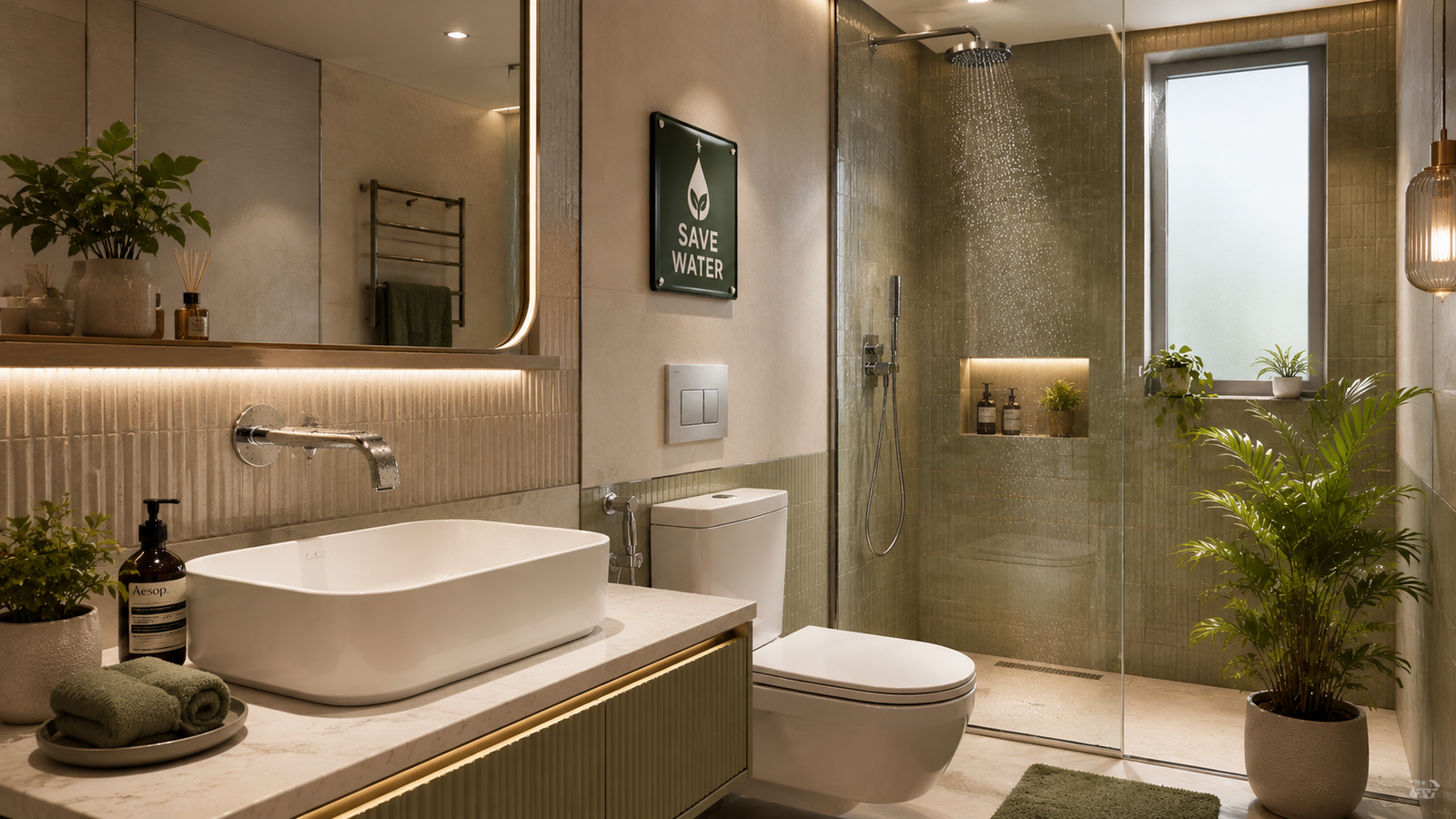
India loses billions of litres of water every year to leaking pipes, outdated habits, and inefficient bathroom fittings. Switching to Water Saving Bathroom Fixtures is one of the simplest changes a Mumbai homeowner can make. It cuts water bills and protects a resource that grows scarcer with every passing year.
If you have ever woken up in May or June to dry taps and zero supply, you already know the anxiety that comes with Mumbai’s summer water cuts. Neighbourhoods across Andheri, Thane, and Navi Mumbai face rationed hours and expensive tanker deliveries. The daily scramble to make whatever water you have last through the day is familiar to millions.
The good news is that the right fixture upgrades, done once, protect your household from the worst of those situations every year going forward. This guide covers every fixture worth upgrading, the real savings you can expect, and how to choose the right products for your home.
Table of Contents
- Why Water Conservation Matters in Indian Homes
- Best Water Saving Bathroom Fixtures for Indian Homes
- How Much Water Can You Save with the Right Fixtures?
- Top Water Saving Bathroom Fixture Brands Available in India
- How to Choose the Right Water Saving Bathroom Fixtures
- Simple Habits That Boost Water Saving in Bathrooms
- Conclusion
- Frequently Asked Questions
Why Water Conservation Matters in Indian Homes
Mumbai consumes over 3,800 million litres of water per day. Yet supply cuts, summer shortages, and rising tanker costs hit the city every single year. India ranks among the most water-stressed nations in the world, with per capita water availability falling sharply over the last three decades. As Monarch Bath notes in its guide to eco-friendly bathroom upgrades, even small fixture changes at home add up across millions of households.
In fact, the bathroom is the largest water consumer in a typical Indian household. Showers, flushing, and tap use together account for nearly 65 percent of total home water consumption. That one room holds the most opportunity for change.
Furthermore, upgrading bathroom fixtures is not only a financial decision. It is an environmental one. Every litre saved at home reduces the load on municipal supply systems and groundwater reserves that are already stretched beyond sustainable limits. Most of these upgrades are one-time changes that pay for themselves within months.
Best Water Saving Bathroom Fixtures for Indian Homes
Today’s Water Saving Bathroom Fixtures combine smart engineering with premium aesthetics. You do not have to choose between saving water and having a bathroom that looks good. Here are the fixtures that deliver the greatest impact for Indian homes.
Low Flow Faucets and Aerators
A standard tap flows at 12 to 15 litres per minute. A low flow faucet fitted with an aerator cuts that figure to 6 litres per minute or less by mixing air into the water stream. The pressure feels similar and it halves water waste.
Moreover, aerators are the lowest-cost upgrade in any bathroom. They screw onto existing taps, cost a few hundred rupees, and pay back within weeks. For new installations, choose faucets with a BEE rating and a maximum flow rate below 8 litres per minute.
Pro Tip: Fit aerators on your kitchen tap too, not just bathroom taps. Most Indian kitchens run at 12 or more litres per minute. A Rs 200 aerator cuts that in half overnight, and you will not notice any difference in how the water feels.
Water Efficient Showerheads
The average Indian shower uses 60 to 80 litres of water. A water efficient shower rated at 6 to 8 litres per minute brings that figure down to 30 to 40 litres without reducing perceived pressure. Some models use a pressurised spray pattern that actually feels stronger than a standard showerhead running at twice the flow rate.
If you are redesigning your bathroom, pair an efficient showerhead with a shower enclosure. Enclosures prevent splash loss and reduce the floor area that needs drying, cutting indirect water use from mopping as well.
Dual Flush Toilets
Flushing accounts for roughly 30 percent of household water use in India. A single-flush toilet uses 9 to 13 litres per flush. A dual flush system offers two options: 3 litres for liquid waste and 6 litres for solid waste. The savings accumulate fast in a household of four.
Eco-friendly toilets with dual flush mechanisms are now available across a wide price range. Not ready for a full toilet replacement? Retrofit dual flush valves cost under Rs 1,500 and fit most existing cisterns.
Pro Tip: Suspect your cistern is leaking silently? Drop a little food colouring into the cistern and wait 15 minutes without flushing. If colour seeps into the bowl, your flapper valve is leaking around the clock. This two-minute check can save 30 to 200 litres every single day.
Sensor and Touchless Taps
Touchless taps use infrared sensors to start and stop water flow automatically. They eliminate habit-based waste from leaving a tap running during handwashing or teeth brushing. Research shows sensor taps reduce water use at a single basin by 30 to 70 percent compared to manual operation.
These work particularly well when fitted to wash basins in family bathrooms and guest bathrooms, where different users have different habits. The sensor responds only when hands are present, which removes the decision entirely.
Thermostatic Shower Valves
Most people run the shower for 30 to 60 seconds before the water reaches a comfortable temperature. That warm-up water goes straight down the drain. A thermostatic valve holds water at a pre-set temperature and delivers it at the right heat from the first second.
Additionally, Diverters and shower valves with thermostatic control prevent scalding, which makes them valuable in homes with children or elderly residents. One valve can serve both a showerhead and a hand shower simultaneously, reducing hardware and the water wasted when switching between modes.
Flow Restrictors and Regulators
A flow restrictor is a small disc fitted inside a tap or showerhead connection that physically caps the maximum flow rate. Unlike aerators, they work on pressure rather than air mixing, making them ideal for high-pressure municipal supplies where aerators alone may not be sufficient.
However, homeowners often overlook Bathroom Accessories like flow restrictors and pressure regulators, yet they deliver excellent value per rupee spent. Pair them with quality Bathroom Fittings to get consistent performance across every point in the bathroom.
How Much Water Can You Save with the Right Fixtures?
Numbers make the case clearly. Here is what a typical Mumbai household of four can expect to save after upgrading key fixtures.
| Fixture | Standard Use (litres/day) | After Upgrade (litres/day) | Daily Saving |
| Faucets (4 taps) | 120 | 60 | 60 litres |
| Showerhead | 200 | 100 | 100 litres |
| Toilet flush (16 flushes) | 160 | 72 | 88 litres |
| Sensor tap (handwash) | 40 | 20 | 20 litres |
| Total | 520 | 252 | 268 litres |
| Annual Total | 1,89,800 litres/year | 91,980 litres/year | 97,820 litres saved / approx. Rs 2,000-3,500 per year |
The annual INR estimate follows Mumbai’s BMC domestic slab tariff (water plus sewage charges combined), including reduced tanker dependence during summer supply cuts. Your actual saving will vary by building, floor, and consumption tier.
Homes that upgrade all four fixture types typically cut bathroom water use by 40 to 50 percent within the first year.
The financial case for Water Saving Bathroom Fixtures is clear. So is the environmental one. Every household that reduces consumption by this margin collectively takes millions of litres per day off the city’s strained supply network.
Top Water Saving Bathroom Fixture Brands Available in India
Several trusted brands manufacture BEE-rated Water Saving Bathroom Fixtures that are widely available across India. Each brings something distinct to the table, so it is worth knowing what to look for before you buy.
- Jaquar – wide aerator-fitted faucet range, reliable dual flush systems
- Grohe – German-engineered thermostatic valves and low flow showerheads
- American Standard – strong dual flush toilet lineup at multiple price points
- Cera – budget-friendly water saving taps and basin fittings
- Kohler – premium sensor taps and high-efficiency showerheads
- Hindware – solid mid-range dual flush and low flow options
When buying, check the flow rate printed on the product or packaging. Look for taps rated below 8 litres per minute and showerheads below 9 litres per minute as a practical baseline for Indian conditions.
How to Choose the Right Water Saving Bathroom Fixtures
Choosing the right fixtures means matching product specifications to your home’s actual conditions. Here is a practical framework that any Mumbai homeowner can use before making a purchase.
Check your water pressure first. Mumbai flats vary widely, from 10 PSI on upper floors to 60 PSI at ground level. Aerators and low flow showerheads perform best at moderate pressure. At very low pressure, some models restrict flow too much and leave users dissatisfied. Ask your supplier for a pressure-rated recommendation before buying.
Next, match the fixture to how the bathroom is used. A guest bathroom used a few times a week does not need a thermostatic valve. A master bath used twice daily by two people is a strong candidate for every upgrade on this list.
Also, think about your renovation timeline. If you are doing a full bathroom remodel, build a Modern Bathroom Design that integrates water saving from the planning stage. If you are retrofitting an existing bathroom, start with aerators and a dual flush valve for the fastest payback with the least disruption.
Finally, evaluate total cost of ownership. A Rs 500 aerator may save more water annually than a Rs 15,000 feature fixture with a lower flow rating. Calculate savings per rupee spent, not the headline price alone. The upgrades that look modest on paper often do the most work.
Simple Habits That Boost Water Saving in Bathrooms
Fixtures do the heavy lifting, but habits close the remaining gap. These six practices cost nothing and take under a minute each to build into your daily routine.
- Turn off the tap while brushing teeth. A running tap wastes 6 litres per minute.
- Fix dripping taps within 24 hours. One drip per second wastes 30 litres a day.
- Collect shower warm-up water in a bucket. Use it for plants or floor mopping.
- Set a shower timer. A water efficient showerhead still uses more water in 10 minutes than in 5.
- Do not use the toilet flush to dispose of small waste. Keep a bin nearby instead.
- Check for hidden leaks monthly using the meter test. Turn off all taps, note the meter reading, wait 30 minutes, then check again. Any movement means a leak somewhere in the house.
These habits cost nothing. Combined with upgraded fixtures, they push total bathroom water savings past 50 percent for most households.
Conclusion
Water saving in your Mumbai home does not require a full renovation or a large budget. Start with an aerator, a dual flush valve, or a low flow showerhead, and you will see the difference on your very next water bill. Layer the right habits on top and the savings compound year on year. The biggest reward arrives every summer when supply cuts hit and your household is already using half what it used to.
Browse the full range of water saving bathroom fittings at monarchbath.com and find products built for Indian water pressures, climates, and homes.
Frequently Asked Questions
What are water saving bathroom fixtures?
These eco-friendly fittings are taps, showerheads, toilets, and valves engineered to deliver full function while using significantly less water. They work through aerators, flow restrictors, dual flush mechanisms, and sensor controls. Most are direct replacements for existing fittings and require no major plumbing changes to install.
How much water can low flow fixtures save in India?
A household of four that upgrades faucets, showerheads, and toilets can save between 80,000 and 1,00,000 litres annually. That is a 40 to 50 percent reduction in bathroom water use. The saving also reduces dependence on tanker supply during Mumbai’s summer shortage months, which lowers overall household costs.
Are dual flush toilets worth it for Indian homes?
A dual flush toilet uses 3 to 6 litres per flush compared to 9 to 13 litres for a standard cistern. For a family of four making 16 flushes a day, that is a saving of over 30,000 litres per year. The cost difference between standard and dual flush models typically pays back within 18 months through water bill savings.
Do aerator faucets reduce water pressure?
Aerators reduce flow rate, not pressure. By mixing air into the water stream, they maintain a full, consistent feel while using less water per minute. In low-pressure situations common on upper floors in Mumbai buildings, choose a wide-spray aerator rather than a pencil-jet type for the most comfortable result.
Which water saving bathroom fixtures are best for Mumbai homes?
For Mumbai conditions, prioritise dual flush toilets, aerator-fitted taps, and low flow showerheads first. Thermostatic valves add strong value in buildings with inconsistent hot water supply. Sensor taps work well for families with children. Choose products rated for 6 to 8 litres per minute for the best balance of savings and user satisfaction.
Can water saving fixtures help reduce my water bill?
Yes, significantly. Mumbai’s water tariff uses a consumption slab structure, so reducing usage can drop you into a lower billing tier. Households that cut consumption by 40 percent typically see bill reductions of 25 to 35 percent. Savings on tanker costs during supply cuts add a further financial benefit throughout the year.